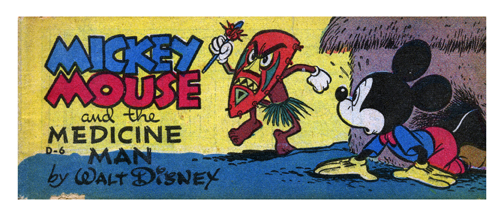
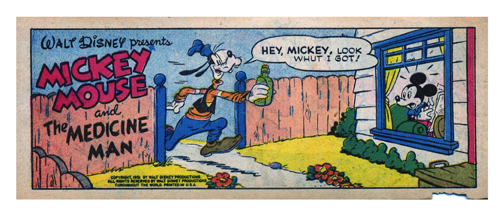
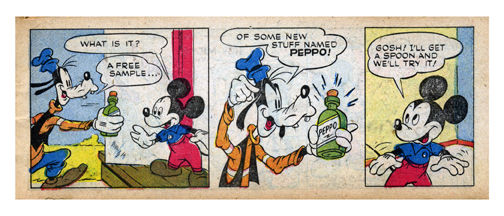
Faccio rimbalzare questa bizzarria appena vista su Boing Boing: un vecchio fumetto di Mickey Mouse che vende anfetamine, somministrandole pure a due personaggi senza il loro consenso. LOL. Una delle poche cose interessanti viste negli ultimi giorni su Boing Boing. L’idea di Topolino che sfrutta le popolazioni del terzo mondo per spacciare delizie chimiche mi sollazza molto. Lo avrei fatto anche io, che male c’è?
Come saprete, ne ho accennato alcune volte nei commenti un annetto fa, la mia posizione in materia è quella (dal punto di vista storico) di Antonio Escohotado, autore di Piccola storia delle droghe e del ben più voluminoso Historia general de las drogas.
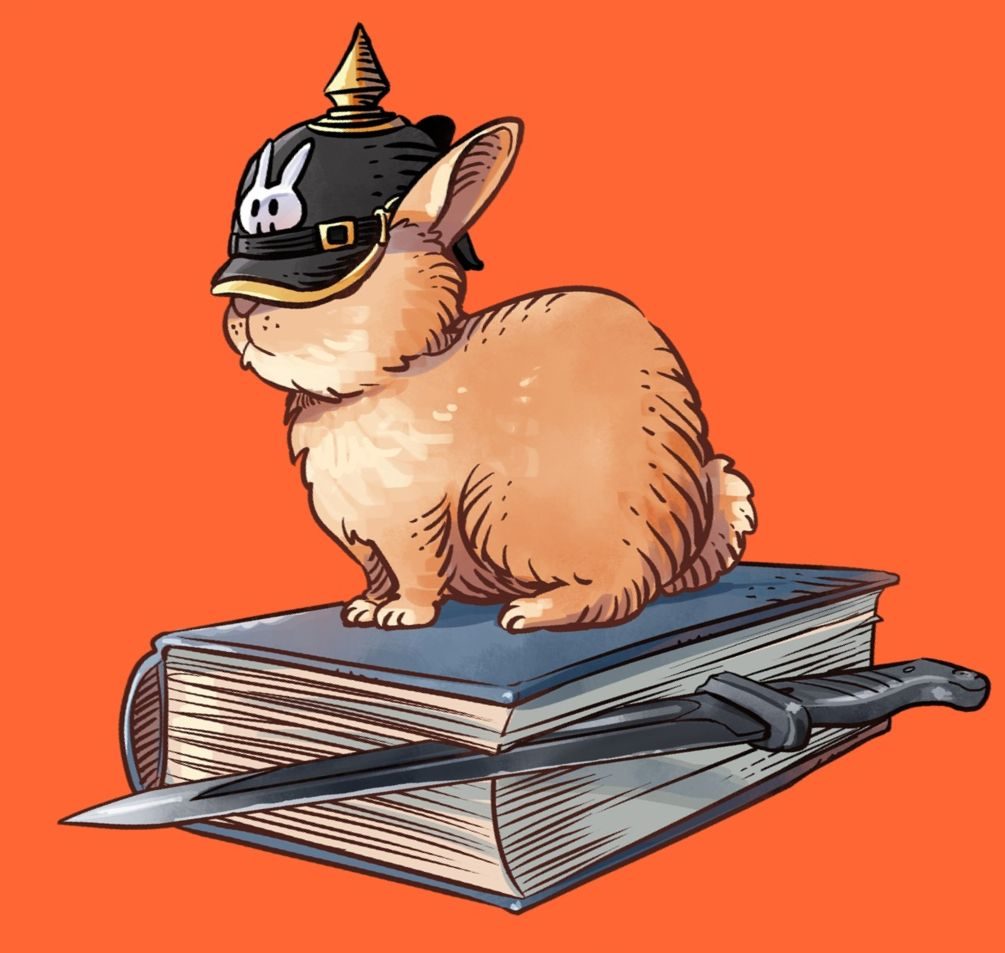
Vedo che anche Davide Mana, mentre scrivevo, ha iniziato il rimbalzo italico della segnalazione di Doctorow. Mi ha battuto sul tempo: mi levo il pickelhaube e accenno un inchino alla sua rapidità. Spero che molti altri seguano il nostro esempio, visto il lulz della cosa. ^_^
Fonte originale: Mickey Mouse on Speed.
The following mini comic book was part of a promotional collaboration between Walt Disney and General Mills. It features Mickey and Goofy, two distinct psychoactive drugs, surreptitious dosing, a bad shaman, and a “talking” elephant. When it was first produced, it was one of an 8-comic set that cost 15 cents plus one Wheaties-brand cereal box top.
It is one of several psychoactive drug-related uses of Disney characters that in retrospect appear naive and inappropriate. This commercial, drug-positive use of characters designed for children raises a number of issues of historical interest. The ethnocentric cultural references, including the representation of Africans and the superiority of American medications, stand out even against the odd amphetamines-are-good-for-you backdrop. It is notable that Mickey Mouse gives powerful drugs to two other characters without their knowledge or consent.
During the 1950s, at the height of the post-World War II expansion of U.S. suburban modernization, a number of stimulant and sedative drugs were widely used and were promoted in the mainstream press. At the time, many were available over the counter without a prescription. The inclusion of clear, positive drug references in mainstream children’s literature and film seems both archaic and surprising given the taboos around psychoactive drugs in place in the 21st century. We hope you’ll enjoy this glimpse into the history of Disney’s characters that Disney itself is unlikely to acknowledge in the modern anti-drug cultural climate.
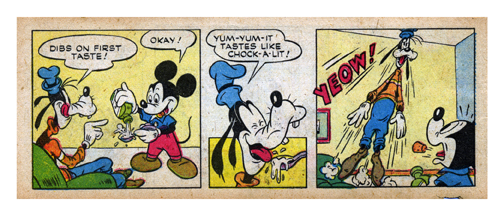
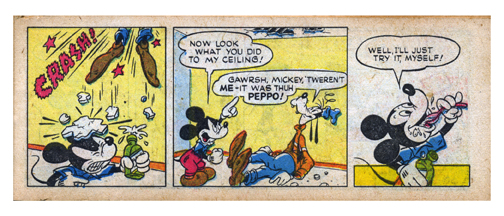
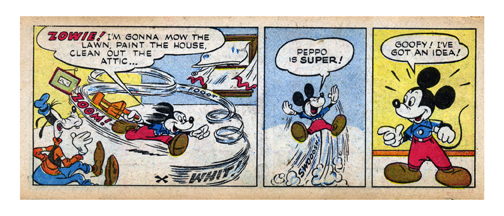
È una droga fantastica: dobbiamo venderla anche noi! Grande Topolino, così si fa!
Prosegui la lettura qui
Ho preferito citare anche Boing Boing per correttezza, visto che se Cory Doctorow non avesse scritto l’articolo io non avrei saputo della pagina che parlava di Topolino spacciatore e di conseguenza non avrei potuto effettuare il rimbalzo. Avevo fatto qualcosa di simile anche nell’articolo sulle Popoffka russe. Abitudine. ^_^
Passando a fumetti più seri, sto mettendo assieme appunti e immagini per scrivere un post su una robetta steampunk che ho letto. I fumetti non mi piacciono granché, ma sto cercando di leggere tutti quelli indicati da Barillier in Steampunk!. Tra un paio di giorni vedremo se mi andrà di pubblicare qualche considerazione.
Non molto differente dalla cocaina di Sherlock Holmes.
Scometto che la Disney farà di tutto per sbarazzarsi di questo fumetto. XD
Duca, procurati The Black Dossier, potrebbe piacerti.
E’ il terzo volume della lega degli straordinari gentleman, ma non è mai arrivato in Italia. E’ uno di quei due o tre libri che devono essere letti in cartaceo per il formato “particolare” (fogli rettangolari con carta diversa per simulare le strisce nei quotidiani dell’epoca, finti coupon di oggetti immaginifici, eccetera…)
Un altro potrebbe essere Rocketo con le sue navi camminatrici e il suo stile diselpunk alla Rocketeer (gran bel fumetto, è riuscito a mettere al centro della storia una gilda di cartografi in un mondo dove l’asse magnetico del pianeta è andato completamente a puttane)
Se vuoi dare un occhiata a quello che ha prodotto l’italica schietta nell’ambito del fumetto steampunk (non penso che Barillier li abbia messi nel libro, forse ha fatto bene), ci sarebbero “Giulio Maraviglia” e la serie pseudodisneyana Wondercity della Freebook (è stata bloccata al numero 6, non è eccezionale, ma alcune idee di formato non sono male)
“Giulio Maraviglia” me lo avevano già consigliato. Comprato in cartaceo (non la versione a copertina rigida, quella morbida) e letto. Speravo molto meglio.
“Greystorm” lo sto seguendo, ma in questo caso sfruttando i sentieri per i muli… era partito male, poi era peggiorato molto (LOL), ma nei numeri 7 e 8 si è risollevato. ^__^
“Aetheric Mechanics” ovviamente è in corso di lettura (interrotta per far spazio ad “Hauteville House” che meritava la precedenza assoluta) e merita una citazione anche solo per una certa cosetta che si ricollega a certi trashissimi romanzi spaziali ottocenteschi… segnerò tutto a tempo debito, devo solo capire come ficcare le cose (pensavo di infilare gli accenni spaziali ottocenteschi, giusto un paio per il lulz, con Captain Smith che agganciavo a Space 1889… ma magari è meglio ficcarli con Aetheric Mechanics. Boh. Ci penserò. Magari li ripeto due volte e chissenefrega ^_^).
“Ignition City”, che dovrebbe avere una estetica tra lo steampunk vero e proprio e il dieselpunk (che ha più in comune col raygun gothic), l’ho sfogliato e dalle vomitate pare interessante. Vedremo.
Hai resistito più ai primi due numeri di Greystorm e sei addirittura andato avanti? Sei un eroe!
Giulio Maraviglia è carino, purtroppo niente di più. Vai con Moore e la lega (I primi due si dovrebbero trovare anche online, come Top10 e Tom Strong): Pollyanna violentata dall’uomo invisibile, gli alieni di HG, il Nautilus e un incontro molto romantico fra Mr. Hyde e l’Uomo Invisibile ^_^
La Lega avevo provato a leggerlo più volte in passato, ma il modo in cui è disegnato mi fa rivoltare lo stomaco e mi dovevo bloccare (anche le battute delle prime pagine, a quanto ricordo, non aiutavano a stimolare la lettura). Riproverò ancora.
Greystorm è stato doloroso, ma ho resistito (e confermo che non merita un euro).
ah si avevo sentito parlare di un fumetto steampunk che è uscito da poco in Italia… magari se lo leggi mi dici cosa ne pensi così lo leggo
e a proposito… mica sapete se è decente l’ultimo libro di Dimitri… Alice? A me sembra tanto, che poi è quello che dice dimitri, alice in versione steampunk.. ma è proprio così o la storia è diversa? se qualcuno l’ha letto,o se il buon duca è tanto disposto da recensirlo o anche solo dargli un’occhiata, aspetto consigli. grazie ^__^
Giusto per sghignazzare:
http://img2.libreriauniversitaria.it/BIT/672/9788872266724g.jpg
I personaggi di Walt Disney hanno accompagnato la vita di milioni di esseri umani con una forza di persuasione seconda solo a quella della Chiesa cattolica.
Finalmente attraverso Topolino, la sua creatura più nota, potremo conoscere la vita e il pensiero del loro creatore.
Un viaggio dalle incredibili sorprese. Il Disney pubblico era solo una maschera: non un supporter dell’american way of life, ma uno scomodo critico a stelle e strisce che, al pari di Ezra Pound, avrebbe gradito un’America diversa.
Un uomo di destra che questo libro aiuta finalmente a decifrare in tutte le sue sfaccettature, dal “conservatorismo rivoluzionario” al “nazismo magico”.
Walt Disney fu anche, poi smentendo di averlo fatto (“Quella signora tedesca era la regista del Reich? Oh…”), l’unico -se ricordo giusto- che permise la visita ai suoi studio alla grandissima regista tedesca Leni Riefenstahl (Triumph des Willens è un documentario di propaganda magnifico, ogni tanto lo riguardo), spiegandogli come lavoravano ecc…
Appena Leni era partita vi era stata la Notte dei Cristalli, per cui il clima del mondo cinematografico americano che aveva incontrato era molto diverso da quello che pensava di incontrare.
Ma Disney, il buon camerata Disney, si comportò come si conviene che un uomo per bene si comporti con una signora, non come fecero gli altri incivili yankee.
E Disney aveva realizzato il capolavoro che ossessionava Hitler e gli altri gerarchi: Biancaneve e i Sette Nani.
Se qualcuno sta ridacchiando all’idea di Hitler che si entusiasma e commuove per Biancaneve, fa meglio a inghiottire la propria ignoranza da bifolco e ricordarsi che lo stesso maestro Sergei Eisenstein arrivò a definirlo il più grande film mai realizzato.
Davvero? Quella di Hitler e biancaneve mi mancava? Dove lo hai letto? Vado pazzo per queste storie…
Era in un documentario sulla regista.
A quanto ho potuto vedere dalle 20 pagine disponibili gratuitamente e da quello che ho letto in giro, pare NON lo sia. Aspetto di leggerlo per capire se è davvero così o no.
Pare sia molto diversa, il che è un bene.
Ma pare anche che lo Steampunk non vi sia affatto, se non sotto forma di un paio di gadget e riferimenti che pongono l’opera fuori dalla vera sub-cultura Steampunk e dentro la “moda del momento da cavalcar come si può” (e pure poco).
Meglio se non è Steampunk. E poi chissenefrega delle etichette: mi basta che sia scritto bene e che sia fantasioso. Se lo sarà, bene, se non lo sarà, male.
Se non è Steampunk mica mi arrabbio… a parte per l’uso pubblicitario del suo esserlo: se non lo fosse sarebbe una disgustosa e indegna pubblicità ingannevole, cosa con cui nessun uomo per bene avrebbe mai a che fare.
Vedremo.
Attenderò di leggerlo prima di dire qualcosa d’altro che non sia connesso all’incipit disponibile gratuitamente.
Il fumetto é lollosissimo.
Duca, saprebbe consigliarmi qualche libro in italiano di genere Bizarro Fiction? Sa, io sono un cane in inglese (anche se mi stó impegnando a impararlo, lo giuro!) e anche se lo steampunk mi piace, non mi esalta particolarmente ^_^”
sicuramente paperino nazizta lo hai già visto ma telo segnalo comunque
http://www.youtube.com/watch?v=fZcs1SHVbz0
non fosse altro che per la sveglia con il pikelhaube al posto della campanella
Sì, lo ricordo. Bello.
Lì è già il periodo (1943) in cui, scoppiata la guerra, Disney decide di essere prima di tutto uno yankee e solo in secondo luogo un fascista (o un nazista, non mi ricordo bene cosa fosse… mi pare un generico fascista): voleva degli USA forti e fascisti di per sé, non sottomessi a un’altra potenza (al massimo alleati alla pari!).
Un po’ diverso dall’atteggiamento di certi comunisti, pronti a vendere il proprio popolo per due spiccioli, che abbondavano nei paesi occidentali.
Uhm… scusate l’ignoranza e l’ottusità.. ma perchè “biancaneve e i sette nani” piacque tanto ai nazisti? C’è qualche metafora che mi sfugge?
Alex Frost
Considerando che era un capolavoro dell’animazione come non vi erano mai stati… direi per quel motivo. ^_^
I nazisti, nonostante la propaganda yankee che li ha ridipinti come Cattivi-Perché-Sì da Fumetto (un po’ come dipingevano i comunisti), erano persone come tutte le altre, gente del pianeta terra nata in paesi occidentali: che andassero pazzi per roba per cui tanti altri andavano pazzi mi pare normale.
Avevano qualche idea malsana in più degli altri, ma non erano Marziani.
E poi i cartoni potevano ben piegarsi ai bisogni della propaganda, si veda ad esempio quello sulle radio che marciano per andare in ogni casa e altri perfino animati peggio. Se agognavano tanto di carpire i segreti di Disney c’era un buon motivo: i loro facevano schifo (anche la Cina ha questo problema rispetto agli anime Giapponesi).
Ah capito 🙂
anche perchè facendo un po di ricerca casuale avevo trovato che Goebbels si adoperò per boicottare il cartone..
Alex Frost
Molto esplicativi del punto di vista di Walt Disney questi filmati:
http://www.youtube.com/watch?v=jO40vMDxeVk
http://www.youtube.com/watch?v=CH7svWZpLvo
Il problema che dovreste aver sperimentato nell’ultima ora con l’apertura di un qualsiasi post, relativo alla colonna destra che veniva chiamata sotto il campo dei commenti invece che di lato, dipendeva dal fatto che, dopo aver sperimentato un paio di cose, avevo riabilitato sia il plugin Quicktags (quello della barra con Grassetto, Corsivo ecc..) che il precedente Quicktags reloaded che avevo tenuto disattivato in caso di problemi col nuovo. Messi assieme distruggevano ovviamente tutto, lol. ^_^
Ho spostato il DB su un nuovo server dei DB prima. Spero che questo limiti i problemi di caduta delle connessioni che erano un po’ troppo frequenti. Servage ormai fa proprio schifo. ^_^
@Alex Frost
Per via del problema collegato al personaggio cattivo mostrato?
http://engrammi.blogspot.com/2009/04/uma-di-naumburg-e-il-mistero-di.html
Sì, ma non conosco i dettagli. So però che per uso privato se li godevano e la cosa è citata anche lì:
ehi duca, non dimenticarti di full metal alchemist!!!!
beata innocenza… ho ancora da qualche parte un “Topolinissimo” con la versione italiana di quel fumetto, ma non mi ero mai reso conto che si trattava di spaccio di stupefacenti nel Terzo Mondo!
http://www.adnkronos.com/IGN/News/Esteri/Minnie-nazista-e-nuda-per-promuovere-una-mostra-gli-autori-rischiano-larresto_589038864.html
Si diceva … ah Duca un sentito ringraziamento per avermi fatto scoprire gigapedia
Baccio
Uno brutto e cattivo è più facile da odiare. Lo stesso presidente Truman voleva che gli scienziati tedeschi che aveva acquistato dopo la guerra fossere dei gigli cresciuti dentro una pozza venefica. E’ per questo che venne creato il progetto Paperclip.
Il progetto Paperclip e Von Braun, Rudolph e Strughold. Sarebbe interessante parlare di queste cose quando si fa riferimento a Nazisti ed Alleati 🙂
Ho notato che sulla Wikipedia italiana sono stati tolti tutti i riferimenti alle testimonianze dei soldati francesi contro quel genio di Von Braun. Anche le informazioni relative al progetto Paperclip sono molto scarne (qualche riga e nessun nome). Eppure qualche parola sul creatore dei missili V2 e capoccia del progetto Apollo bisognerebbe spenderla (penso che Von Braun, Tesla e Tsiolkovsky siano la santa trinità di tutti gli ingegneri del mondo)
Il fumetto oggetto dell’articolo è stato anche tradotto in italiano. Ricordo di averlo letto da bambino nella collana “I classici di Walt Disney”.